
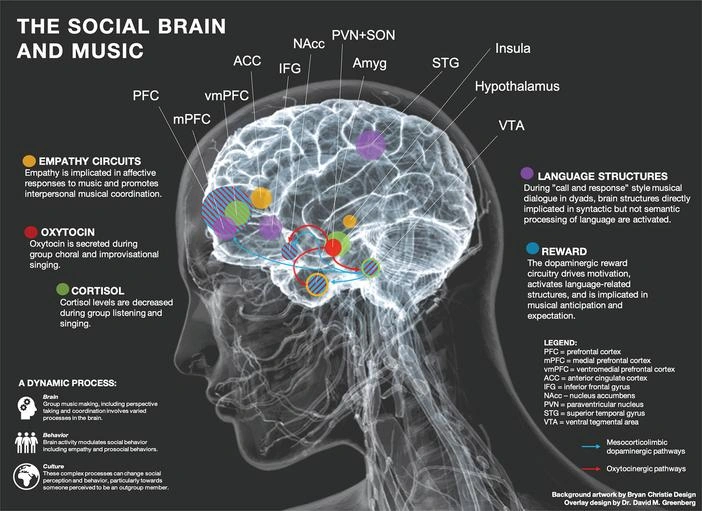
Music activates more brain regions at once than any other human activity. Our brains naturally connect with melodies, rhythms, and harmonies – the same sounds that have brought comfort to people worldwide for centuries, and neuroscience helps explain why. Research has shown music’s therapeutic benefits for patients with stroke, Parkinson’s disease, and memory disorders like Alzheimer’s. The evidence suggests that music reduces anxiety, depression, trauma, psychosis, and stress levels. A Mind survey revealed that 76% of people faced mental health challenges in 2020, which makes music’s healing abilities even more relevant today. Listening to calming music helps us stay present and relaxed. It also boosts our dopamine levels – the neurotransmitter that creates feelings of pleasure and reward. This piece explores the remarkable connection between music and our brains. You’ll discover why certain scales like the pentatonic scale appeal to everyone, and learn practical ways to use music’s therapeutic effects in everyday life. The Emotional Power of Music Across Cultures “”(Rhythm) is there in the cycles of the seasons, in the migrations of the birds and animals, in the fruiting and withering of plants, and in the birth, maturation and death of ourselves,”” — Mickey Hart, Grammy-winning Percussionist, Author, Music Therapy Advocate Music stands as humanity’s universal language. A study of 315 societies revealed [music present in every single one](https://news.harvard.edu/gazette/story/2019/11/new-harvard-study-establishes-music-is-universal/). This remarkable trait goes beyond mere presence. People…
Continue reading this article
Join to unlock the complete article, printable journals, and the full members-only library.