
Category: Employee Assistance Programs (EAP)
-

Adults with ADHD face more workplace challenges than their peers. ADHD accommodations at work become essential for success. Difficulties with attention and organization can substantially affect job performance and the ability to meet deadlines. But thoughtful accommodations for ADHD in the workplace help employees see improvements in productivity, confidence and job satisfaction. Employee Assistance Programs (EAP) provide confidential…
-

Autism diagnoses have increased sharply. Rates rose from one in 150 children in 2000 to one in 36 in 2022. About one in 44 children in the U.S. have been diagnosed with autism, and diagnosis rates in some areas nearly tripled between 2000-2016. Working parents who navigate this reality face challenges that extend beyond home. Research shows that…
-

EAP program benefits are proving transformative for autism support, with data showing autistic employees achieving 48 to 140 percent higher productivity than their neurotypical peers after six months. Autism prevalence has risen from one in 150 children in 2000 to one in 54 by 2016. Yet many organizations don’t deal very well with providing adequate workplace…
-
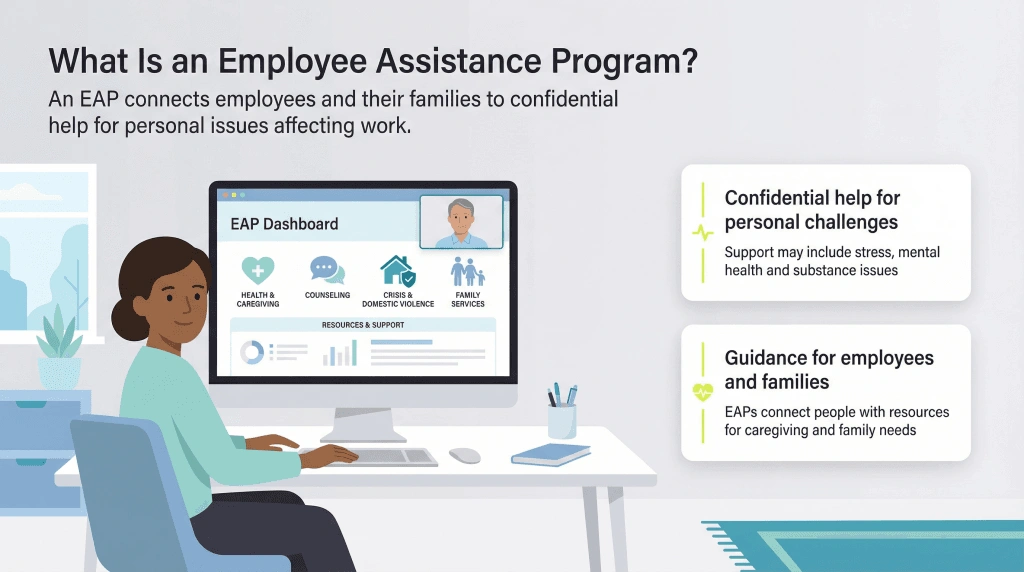
Understanding EAP Programs: What They Are and How They Work Image Source: Business.com An Employee Assistance Program operates as a voluntary, work-based benefit that provides employees and their eligible dependents with free, confidential support services. Most employers offer these programs through third-party providers, which will give privacy and keeps personal information separate from workplace records. The eap system…
-

Recognizing When Work Has Consumed Your Personal Identity Image Source: Mental Health “Never get so busy making a living that you forget to make a life.” — Dolly Parton, Singer, Songwriter, and Philanthropist The warning signs often appear over time, disguised as dedication or ambition. You might find yourself answering “What do you do?” within the first three minutes…
-

Job-related stress and its effect on EAP benefits has become a major concern. Recent studies show that 83% of workers say their mental health suffers due to workplace stress. Most of us have seen a dependable team member suddenly withdraw, miss deadlines, or deliver subpar work. These drops in performance often reveal personal challenges that affect…
-

The unique stress of managing both a career and caring for a loved one affects millions of people every day. Recent data shows that about 5.2 million Canadians of working age—one in four—serve as family caregivers. The situation mirrors in the United States, where one in five workers takes care of ill or elderly adults or children…
-

Parents faced immense stress during the COVID-19 pandemic, with 70% citing family responsibilities as their biggest stressor. Personal challenges at home naturally affect our work lives, impacting focus, productivity, and overall well-being. Employee Assistance Programs (EAPs) are a great way to get help during tough times. These programs don’t just help employees – they extend support to…
-

Workplace stress has reached concerning levels. Studies show 83% of workers say it hurts their mental health. Burnout continues to rise in industries of all types. Up to 85% of laboratory professionals experience it, and 74% report moderate to severe burnout. Business and HR leaders feel the pressure too. More than one in four (26%) say they…
-

Divorce stands as life’s second most stressful experience, surpassed only by losing a spouse. The stress follows employees to work, making support programs crucial. The Office for National Statistics reports 113,505 divorces granted in England and Wales during 2021. Working-age individuals made up 90% of these cases. This means roughly 200,000 employees show up to work while dealing with emotional…