
Workplace stress has reached concerning levels. Studies show 83% of workers say it hurts their mental health. Burnout continues to rise in industries of all types. Up to 85% of laboratory professionals experience it, and 74% report moderate to severe burnout. Business and HR leaders feel the pressure too. More than one in four (26%) say they feel very stressed. This number jumps to 35% in mid-sized companies with 250-500 employees.
Employee assistance programs (EAPs) provide a strong answer to this growing crisis. These programs started in the United States in the 1940s and give vital mental health support to employees who need help. The programs work well – employees who use mental health resources report 30% higher workplace satisfaction. They’re also 25% less likely to leave within their first year. Still, many organizations don’t take full advantage of this valuable resource. In this piece, we’ll look at what an employee assistance program is. We’ll explore how EAP benefits help employees deal with burnout. We’ll also discuss why a good EAP strategy matters, especially since mental health conditions cost businesses over $280 billion each year.
What is an Employee Assistance Program (EAP)?

Image Source: Insperity
“The No. 1 cause of burnout is doing the same thing over and over again and not seeing results.” — Steve Kaczmarski, Business and Burnout Expert
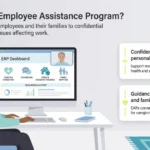
Employee Assistance Programs (EAPs) are voluntary workplace services that help employees who face personal or work-related problems. These programs differ from regular benefits. They focus on short-term counseling and connect employees with other services before their work starts to suffer.
The story of EAPs began in the 1940s [link_1] when companies needed to help workers with alcohol problems. Modern EAPs now cover many more areas. The programs help with mental health, substance abuse, family issues, money problems, legal concerns, workplace disagreements, and family care responsibilities.
The best thing about EAPs is that they’re completely private. Everything stays confidential unless someone’s safety is at risk. On top of that, qualified professionals with Master’s or Ph.D. degrees provide these services. You can reach them anytime, day or night [link_2].
There are some limits to EAP services. Most programs offer eight or fewer free counseling sessions for each mental health issue. But EAPs don’t stop at counseling. They also provide legal help, elder care support, wellness programs, and financial advice.
EAPs have a simple mission: to boost employee wellbeing and increase workplace efficiency. These programs create a win-win situation. They help companies improve productivity while giving employees the support they need for their personal challenges.
How EAPs Help Employees Cope with Burnout

Image Source: Qandle
EAPs help employees fight burnout through specialized services. Counseling is the life-blood of these benefits. Employees can connect with licensed clinicians any time of day about their burnout concerns. These professionals work with employees to create customized strategies that help manage stress.
EAPs go beyond one-on-one counseling. They provide crisis intervention services that quickly respond to traumatic workplace events which can trigger or worsen burnout. Their services include trauma response and crisis management training.
Many employees face burnout due to money or legal problems. EAPs provide expert advice on everything from managing debt to housing education. These programs also include work-life balance resources that help with childcare, elder care, and family duties when life feels overwhelming.
EAPs treat burnout as a “whole-person, whole-system challenge” instead of just a mental health issue. This integrated point of view helps them tackle multiple aspects of burnout at once.
Studies show these programs work well. About 85% of employees who used EAP services reported boosted job satisfaction. Employees can easily access support through phone calls, online platforms, or face-to-face sessions – whatever works best for them.
EAPs tackle the mechanisms of burnout in different areas of life. They give employees immediate support and build long-term resilience strategies.
Benefits and Challenges of EAPs for Employers
Image Source: Verified Market Research
“Constantly scanning the world for the negative comes with a great cost. It undercuts our creativity, raises our stress levels, and lowers our motivation and ability to accomplish goals.” — Shawn Achor, Positive Psychology Researcher, Harvard University, Author of ‘The Happiness Advantage’
Organizations that implement employee assistance programs (EAP) see remarkable financial returns in industries of all types. Studies show that each dollar invested in an EAP brings back $5 to $16 in returns. United Airlines has seen an impressive $16.95 return for every dollar they put in. These programs cut down absenteeism by 33% and reduce work-related accidents by 65%. Workplace productivity jumps by more than 25%.
Money saved goes beyond just better productivity. Companies with EAPs spend less on healthcare, with possible savings reaching $250 per employee each year. These programs also help spot behavioral health issues that affect work performance. Health-related productivity gains can reach up to $15,600 per employee annually.
Companies still face hurdles with EAP implementation. Usage stays below 10% even though these programs are easy to access. Employees worry about privacy and stigma. Most people see EAPs as crisis resources rather than prevention tools. Limited sessions – usually 3-8 per issue and varying provider quality can make it hard to get good care.
Companies should ask employees what support they need, teach them about available services, and make sure trained professionals offer help through different channels to get the most from their EAP.
Conclusion
Burnout plagues today’s workplace, yet EAPs remain a powerful but underused resource for employee wellbeing. These programs are a great way to get support beyond traditional counseling. They address the “whole-person, whole-system challenge” that defines burnout. Mental health challenges cost businesses more than $280 billion each year. This makes EAPs both a compassionate choice and a smart business investment.
Research shows impressive returns on EAP investments. Companies gain $5 to $16 for every dollar spent through lower absenteeism, fewer workplace accidents, and improved productivity. Yet usage rates stay below 10% because employees worry about stigma and privacy.
Companies that want to curb burnout must take decisive action to unlock their EAP’s full potential. Leaders should educate their teams about available services and stress privacy protection. The core team should ask employees about specific support needs. Expanding beyond the typical 3-8 sessions per issue also helps. Making services accessible on multiple platforms increases engagement.
The mental health crisis at work won’t fix itself. EAPs offer a ready solution that serves both employees and employers well. A well-implemented program reduces individual suffering. It creates a healthier workplace where people thrive instead of just getting by.
Key Takeaways
Employee Assistance Programs (EAPs) offer a proven solution to workplace burnout, providing comprehensive mental health support that benefits both employees and organizations.
• EAPs deliver exceptional ROI: Every dollar invested returns $5-16 through reduced absenteeism (33%), fewer accidents (65%), and improved productivity (25%).
• Comprehensive burnout support: EAPs address burnout as a “whole-person challenge” with 24/7 counseling, crisis intervention, financial guidance, and work-life balance resources.
• Underutilization remains a major barrier: Despite proven effectiveness, usage rates stay below 10% due to stigma and confidentiality concerns among employees.
• Active promotion is essential: Organizations must educate staff about services, emphasize confidentiality protections, and ensure multi-platform access to maximize program effectiveness.
• Mental health crisis demands action: With workplace stress affecting 83% of workers and costing businesses $280+ billion annually, EAPs provide an immediate, scalable solution.
When properly implemented and promoted, EAPs transform from underused benefits into powerful tools that create healthier workplaces where employees thrive rather than merely survive burnout.
FAQs
Q1. What is an Employee Assistance Program (EAP) and how does it work? An EAP is a confidential, work-based service that provides short-term counseling and support for employees facing personal or professional challenges. It offers 24/7 access to licensed professionals who can help with issues like stress, mental health, substance abuse, and work-life balance.
Q2. How effective are EAPs in addressing workplace burnout? EAPs are highly effective in addressing burnout. They offer targeted solutions including counseling, crisis intervention, and work-life balance resources. Approximately 85% of employees who use EAP services report enhanced job satisfaction, and these programs can reduce absenteeism by 33% and improve workplace productivity by over 25%.
Q3. Are EAP services truly confidential? Yes, EAP services are confidential. Information shared during counseling sessions remains private, with exceptions only in rare circumstances involving safety concerns. This confidentiality is a key feature that encourages employees to seek help without fear of workplace repercussions.
Q4. What is the return on investment for companies implementing EAPs? The ROI for EAPs is substantial. Studies show that for every dollar invested in an EAP, companies can expect returns between $5 to $16. This comes from reduced absenteeism, fewer workplace accidents, improved productivity, and decreased healthcare costs.
Q5. Why do some employees hesitate to use EAP services? Despite their benefits, EAP usage rates often remain below 10%. This is primarily due to stigma surrounding mental health issues, concerns about confidentiality, and a misconception that EAPs are only for crisis situations rather than preventative care. Some employees may also be unaware of the full range of services offered by their EAP.