
Music activates more brain regions at once than any other human activity. Our brains naturally connect with melodies, rhythms, and harmonies – the same sounds that have brought comfort to people worldwide for centuries, and neuroscience helps explain why.
Research has shown music’s therapeutic benefits for patients with stroke, Parkinson’s disease, and memory disorders like Alzheimer’s. The evidence suggests that music reduces anxiety, depression, trauma, psychosis, and stress levels. A Mind survey revealed that 76% of people faced mental health challenges in 2020, which makes music’s healing abilities even more relevant today. Listening to calming music helps us stay present and relaxed. It also boosts our dopamine levels – the neurotransmitter that creates feelings of pleasure and reward.
This piece explores the remarkable connection between music and our brains. You’ll discover why certain scales like the pentatonic scale appeal to everyone, and learn practical ways to use music’s therapeutic effects in everyday life.
The Emotional Power of Music Across Cultures
“”(Rhythm) is there in the cycles of the seasons, in the migrations of the birds and animals, in the fruiting and withering of plants, and in the birth, maturation and death of ourselves,”” — Mickey Hart, Grammy-winning Percussionist, Author, Music Therapy Advocate
Music stands as humanity’s universal language. A study of 315 societies revealed [music present in every single one](https://news.harvard.edu/gazette/story/2019/11/new-harvard-study-establishes-music-is-universal/). This remarkable trait goes beyond mere presence. People respond to music the same way physically and emotionally, regardless of their cultural background.
Research comparing Western and East Asian listeners shows how our bodies react to music in surprisingly similar ways. People feel happy and danceable tunes mostly in their arms and legs. Tender or sad melodies create sensations in the chest. Western listeners feel scary music deep in their gut.
These shared responses between cultures likely come from how our brains process sound and emotion. Our bodies seem to react to music through biological instincts rather than learned behavior.
Music’s emotional power seems tied to how it brings people together. Dance exists in every studied culture, which shows how moving to music is fundamental to human nature. When people move and sing together, they create universal signs of community belonging.
Music does more than just entertain us. This shared understanding of music’s emotional effects helps therapists worldwide. Music therapy works well to help people with their physical, emotional, mental, and social needs in a variety of populations.
How Music Affects the Brain: The Neuroscience Behind the Magic
Image Source: APA PsycNET – American Psychological Association
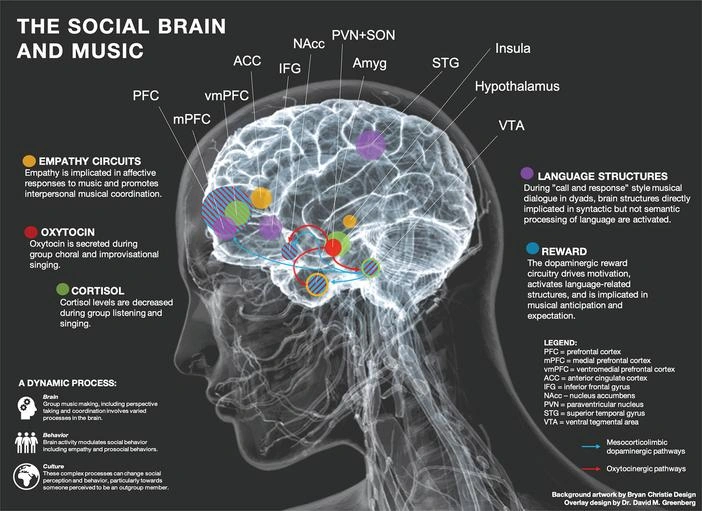
Music’s effect on our brain is remarkable. Multiple brain regions work together in a way that no other stimulus can match. The auditory cortex starts processing the sound first and then signals travel to the hippocampus and cingulate regions to create a complex feedback loop.
Scientists have found that music gets our emotion-processing areas to work so well that they sync up during emotional pieces. The limbic system, which controls our emotions and memory, lights up when we listen to music.
The sort of thing I love is how music affects our brain’s reward system. Musical “chills” or frisson can boost dopamine levels by up to 9%. Our brain releases this same chemical when we enjoy food or drugs. Research with levodopa (which boosts dopamine) and risperidone (which blocks it) proved that dopamine directly affects our musical pleasure.
Music does more than trigger emotional responses – it builds stronger neural connections through neuroplasticity. Your memory, attention, and learning improve with regular listening because it increases brain-derived neurotrophic factor in the hippocampus. Musicians show clear physical changes in their brains, including a larger corpus callosum and more gray matter in sound processing areas.
Music stands out as one of the rare activities that gets both brain hemispheres to work together, which creates powerful cross-brain communication.
Healing Through Music: From Therapy to Daily Life
Image Source: Consult QD – Cleveland Clinic
Music’s healing power reaches way beyond entertainment into clinical therapy and everyday wellness practices. Clinical studies show that music therapy helps reduce pain intensity in patients of all age groups.
The effects on hospice patients are especially impressive. 88% report improved mood and reduced anxiety after music therapy sessions, and 90% experience reduced pain levels. These remarkable outcomes happen because music triggers the release of endorphins that act as natural painkillers.
Music therapy proves versatile in treating various conditions. Rhythm becomes a movement template for Parkinson’s disease patients. It helps coordinate motion and stimulates attention. Familiar melodies help dementia patients unlock forgotten memories, even when other memory forms are nowhere near functional.
The healing benefits extend into daily life. Your brain’s pleasure pathways activate when you listen to your favorite songs. This releases dopamine in the striatum during peak emotional moments. Creating playlists like those used in therapy sessions can trigger powerful emotional responses and memory recall at home.
Active music engagement through singing or playing instruments offers additional benefits. Musicians’ brains typically show greater gray matter volume. They experience less age-related decline compared to non-musicians. This suggests that regular musical practice could protect cognitive function throughout life.
Conclusion
Music and our brains share a deep connection that explains why melodies have helped heal people throughout history. Scientists now know that music uniquely activates multiple brain regions at once and triggers powerful chemical responses. This explains why music therapy works so well for patients with Parkinson’s disease, Alzheimer’s, anxiety, depression, and chronic pain.
Music speaks a universal emotional language that goes beyond cultural boundaries. People around the world show similar physical and emotional responses to it. Our brains naturally seek musical experiences, whether through the dopamine rush from our favorite song or when familiar tunes unlock old memories. This makes music more than just entertainment – it’s a powerful tool for healing.
You can use these brain science insights in your daily life. Simple actions like making your own playlists, playing instruments, or taking time to listen mindfully can make a big difference. Our brains are wired to heal through music – we just need to press play. Research keeps showing us how music helps heal, giving us great ways to boost wellbeing, handle pain, and keep our minds sharp throughout life. Modern science backs up what people have known for thousands of years: music creates a unique path to healing that runs deep in our brain’s structure.
Key Takeaways
Music uniquely activates more brain regions simultaneously than any other human activity, making it a powerful tool for healing and cognitive enhancement.
• Music triggers a 9% increase in dopamine levels during peak emotional moments, explaining why our brains naturally crave musical experiences for pleasure and reward.
• Music therapy effectively reduces pain, anxiety, and depression across all age groups, with 88% of hospice patients reporting improved mood after sessions.
• Rhythm serves as a movement template for Parkinson’s patients, while familiar melodies can unlock memories in dementia patients even when other memory forms fail.
• Regular musical engagement increases gray matter volume and protects against age-related brain decline, suggesting music acts as cognitive insurance throughout life.
• Creating personalized playlists and actively engaging with instruments can provide therapeutic benefits similar to formal music therapy in daily life.
The science confirms what humans have known intuitively for millennia: music offers a unique pathway to healing that resonates deep within our neural architecture, making it both a universal language and a powerful therapeutic tool accessible to everyone.
FAQs
Q1. How does music impact different regions of the brain? Music uniquely activates multiple brain regions simultaneously, including the auditory cortex, hippocampus, and limbic system. It engages emotion-processing areas, triggers the reward system, and strengthens neural connections through neuroplasticity, making it a powerful tool for cognitive enhancement and emotional regulation.
Q2. Can music really help reduce pain and anxiety? Yes, music therapy has been shown to effectively reduce pain intensity and anxiety across all age groups. For example, 88% of hospice patients report improved mood and reduced anxiety after music therapy sessions, while 90% experience reduced pain levels. This is partly due to music’s ability to release endorphins, which act as natural painkillers.
Q3. How does music therapy benefit patients with neurological disorders? Music therapy offers significant benefits for various neurological conditions. For Parkinson’s disease patients, rhythm helps organize movements and improve coordination. In dementia care, familiar melodies can unlock forgotten memories, even when other forms of memory are significantly impaired. These effects demonstrate music’s ability to engage multiple brain pathways.
Q4. Is there a universal emotional response to music across cultures? Research shows that emotional responses to music are remarkably consistent across cultures. For instance, happy music is felt primarily in the limbs, while sad music resonates in the chest area, regardless of cultural background. This universality suggests that music’s emotional impact may be rooted in biological rather than learned cultural responses.
Q5. How can I incorporate music’s healing benefits into my daily life? You can harness music’s therapeutic potential by creating personalized playlists, engaging actively with instruments, or setting aside time for mindful listening. Regular musical engagement has been shown to increase gray matter volume and protect against age-related brain decline. Even simple activities like listening to preferred songs can trigger dopamine release and provide emotional benefits similar to formal music therapy.