
Understanding EAP Programs: What They Are and How They Work
Image Source: Business.com
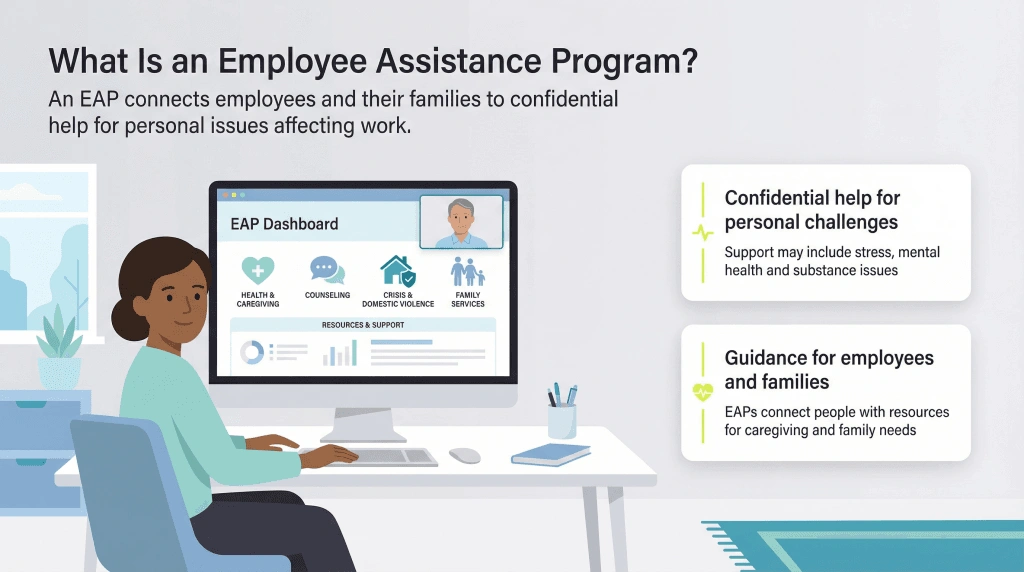
An Employee Assistance Program operates as a voluntary, work-based benefit that provides employees and their eligible dependents with free, confidential support services. Most employers offer these programs through third-party providers, which will give privacy and keeps personal information separate from workplace records.
The eap system definition centers on short-term problem identification and resolution rather than long-term therapy. Programs typically have assessment services, brief counseling sessions (usually limited in number), referrals to specialized professionals, and follow-up support. What is an eap system’s main goal? It addresses personal concerns before they escalate into performance issues.
Access works through multiple channels. Employees can contact their EAP via phone, telehealth platforms, or in-person appointments, with many programs available 24 hours a day. The original step involves an assessment where a counselor reviews the situation and determines appropriate support options.
Confidentiality stands as a life-blood of these programs. Information remains protected under HIPAA and professional licensing regulations. Your employer receives only anonymized utilization data, never personal details about your sessions or the issues discussed. Limited exceptions exist when there’s imminent danger to yourself or others, suspected abuse of children or vulnerable adults, or court-ordered disclosures.
Eligibility extends beyond just employees. Your employer’s plan often has coverage that includes spouses, domestic partners, and children under 26.
How EAPs Support Employees Struggling with Addiction

Image Source: 10 Acre Ranch
Substance use issues bring the eap system meaning into sharp focus through targeted addiction support services. These programs identify problems at early stages and allow intervention before situations escalate. This proactive approach often results in shorter and more effective treatment periods.
Addiction services include confidential assessments conducted by professionals trained in substance use disorders. Counselors assess your situation during original consultations and determine appropriate care levels. They develop individual-specific action plans. Short-term counseling sessions address immediate concerns. Education programs provide information about addiction and recovery processes along with coping strategies.
The referral component matters just as much. EAP staff research treatment options and review insurance coverage details. They connect you with accredited rehabilitation centers that offer detox, inpatient, or outpatient care based on individual needs. They handle insurance coordination and remove administrative burdens during stressful times.
The results speak for themselves. High-risk drinking rates dropped from 30 percent to just 3 percent among employees who accessed EAP services. Workplace wellness programs that incorporate EAP support reduce related costs by 30 to 40 percent.
Family members living in the same household can access these services too. This matters because addiction affects entire family systems, not just individuals who struggle with substance use.
Getting Help Through Your EAP: From First Contact to Recovery

Image Source: CarePlusSolutions
Your first contact with the EAP system starts with a phone call or online portal access. A trained counselor answers at the time you reach out and asks simple questions about your needs and priorities for support. Sessions typically last 20 to 30 minutes for original calls, though crisis situations receive immediate attention. Counselors match you with providers based on your specific situation, location and availability.
The counselor develops an action plan with you after your original assessment. Most programs authorize three to six free sessions and focus on solution-oriented approaches and practical recommendations. Your counselor discusses continuation options once EAP benefits reach their limit. These include transitioning to insurance coverage or community resources.
Legal protections apply for employees entering formal treatment. The Family and Medical Leave Act provides up to 12 weeks of unpaid, job-protected leave for substance use disorder treatment. The Americans with Disabilities Act protects individuals in recovery from discrimination and requires employers to provide reasonable accommodations such as flexible scheduling for counseling appointments.
Return-to-work meetings clarify expectations before you resume duties. Your aftercare plan outlines ongoing support needs, including attendance at counseling sessions or support group meetings. Employers must accommodate these commitments during your recovery period. Regular check-ins with supervisors help track progress and address concerns early.
Conclusion
EAP programs offer a lifeline for employees facing addiction. They combine confidentiality with proven results. These services provide everything from original assessments to treatment referrals without costing you anything out of pocket.
The statistics are clear: high-risk drinking rates drop when employees access EAP support. Legal protections during recovery give you both the resources and job security needed to seek help. Don’t wait for addiction to affect your performance. Reach out to your EAP today and take the first step toward recovery.
Key Takeaways
EAP programs provide a confidential, cost-free pathway to addiction recovery support that protects both your privacy and job security while delivering measurable results.
• EAPs offer completely free, confidential addiction support – including assessments, counseling, and treatment referrals with no cost to employees or their families.
• Legal protections safeguard your job during recovery – FMLA provides up to 12 weeks of protected leave, while ADA prevents discrimination and requires reasonable accommodations.
• Results prove EAPs work effectively – high-risk drinking rates dropped from 30% to just 3% among employees who used EAP services.
• Access is simple and immediate – contact your EAP through phone, online portals, or in-person appointments, with many programs available 24/7.
• Support extends beyond the employee – family members can access services too, recognizing that addiction affects entire household systems.
The key to successful recovery lies in early intervention. EAP programs identify and address substance use issues before they escalate into performance problems, making treatment more effective and recovery periods shorter. The eap system has become a critical workplace resource. Adoption grew from just 25% of Fortune 500 companies in 1972 to 57% by 1979. These programs address a wide range of employee concerns, with approximately 30% of cases involving alcohol and drug-related issues.
So what is an eap system and how does it work? The eap system definition covers confidential counseling services, treatment referrals and management consultation designed to support employees and their families. The eap system meaning extends beyond referrals. These services are free, voluntary and confidential.
In this piece, we’ll explore how EAP programs provide support for employees facing addiction, from understanding the basics to accessing recovery resources.
FAQs
Q1. Is my information kept private when I use EAP services? Yes, EAP services are completely confidential and protected by state and federal laws, including HIPAA and professional licensing regulations. Your employer only receives anonymized usage data and never learns personal details about your sessions or the issues you discuss. Limited exceptions apply only in cases of imminent danger, suspected abuse, or court-ordered disclosures.
Q2. Can EAP programs help with substance abuse issues? Absolutely. EAP programs provide comprehensive support for employees struggling with alcohol or drug use, including confidential assessments, short-term counseling, referrals to treatment programs, and help navigating insurance benefits. Studies show that high-risk drinking rates dropped from 30% to just 3% among employees who accessed EAP services for addiction support.
Q3. How do I access my company’s EAP services? You can contact your EAP through multiple channels including phone, telehealth platforms, or in-person appointments. Many programs offer 24/7 availability. Simply call the EAP hotline or access the online portal, and a trained counselor will conduct an initial assessment and help develop a personalized action plan for your needs.
Q4. Will I lose my job if I seek addiction treatment through EAP? No. Legal protections safeguard your employment during recovery. The Family and Medical Leave Act provides up to 12 weeks of job-protected leave for substance use disorder treatment, and the Americans with Disabilities Act protects individuals in recovery from discrimination. Employers must also provide reasonable accommodations like flexible scheduling for counseling appointments.
Q5. What happens after my initial EAP sessions are complete? Most EAP programs provide three to six free sessions. After these sessions, your counselor will discuss continuation options, which may include transitioning to your insurance coverage or connecting you with community resources. For ongoing recovery support, your EAP can help coordinate aftercare plans, including counseling sessions and support group meetings.