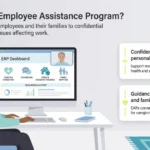

Workplace stress is at an all-time high, with 90% of employees saying it hurts their mental health. The impact goes beyond personal well-being. Mental health conditions cost businesses over $280 billion each year. Mental-health-related absences have jumped 300% between 2017 and 2023. These numbers show why EAP program benefits are crucial for organizations that want to support their teams.
A deeper look at workplace wellness reveals mental health as the main reason 35% of workers quit their jobs. The work environment makes it hard for 71% of employees to focus. EAP benefits are a great way to get mental health support that tackles these challenges head-on. This piece will show you what an EAP benefit has, how these programs boost employee mental health, and why starting an employee mental health program could be your organization’s most important move this year.
What is an Employee Assistance Program (EAP)?
Employee Assistance Programs (EAPs) are voluntary workplace benefits that provide free and confidential assessments, short-term counseling, referrals, and follow-up services to employees who face personal or work-related challenges. Originally starting in the 1930s to help with workplace alcoholism, EAPs have grown substantially over time.
In essence, these programs now help with a complete range of mental and emotional well-being issues. They support employees dealing with substance abuse, stress, grief, family problems, and psychological disorders. EAP counselors work with managers and supervisors to solve employee and organizational challenges.
Furthermore, today’s EAPs include services like:
- Mental health counseling
- Financial and legal assistance
- Substance abuse treatment
- Work-life balance resources
- Crisis management support
EAP services keep growing and now include childcare, elder care, and other concierge services. Notably, these programs are accessible to about 97% of large companies with over 5,000 employees and 75-80% of medium and small companies.
EAP’s support reaches beyond employees to include their spouses and dependents. This all-encompassing approach helps organizations prevent and handle workplace violence, trauma, and other emergencies. It supports employee wellness through emotional, physical, occupational, intellectual, financial, social, environmental, and psychological dimensions.
Why Mental Health Support at Work Matters

Image Source: Wellhub
Mental health issues at work have become a worldwide crisis. About 15% of working-age adults live with a mental disorder. US statistics paint an even grimmer picture – 45% of workers say they’ve dealt with mental illness at some point in their lives. These problems don’t just affect individuals.
The numbers tell a shocking story. Companies worldwide lose 12 billion workdays each year due to mental health problems, costing them USD 1 trillion in lost productivity. Depression hits businesses hard – it cuts worker productivity by 35% and costs the US economy USD 210.50 billion yearly. The good news? Money spent on mental health pays off big time. Companies get back USD 4.00 in productivity for every dollar they spend on mental health support.
These problems show up clearly at work. Workers with depression miss around 31.4 days yearly. Work pressure takes its toll on 76% of employees who feel emotionally stressed. This stress makes it tough for 51% of workers to do their jobs properly.
New research shows burnout affects 66% of American workers. Young professionals get hit the hardest – 83% of workers between 25-34 years show burnout symptoms. Employee assistance programs help companies tackle these issues head-on. They create workplaces where mental health becomes a top priority, not just an afterthought.
Key Benefits of EAPs for Employees and Employers
EAPs create clear benefits for companies and their employees. Companies that invest in these programs see remarkable returns – each dollar spent on an EAP saves employers between $5-$16. When companies put strong EAPs in place, they see their employee retention rates climb by 12-15% within five years.
These programs save money in several ways. Companies report fewer absences (down 33%), workplace accidents drop significantly (65% reduction), workers’ compensation claims decrease (30% less), and employee grievances fall by half. Supervisors spend 74% less time handling disciplinary issues.
Employees get private support in many key areas through EAPs:
- Counseling help with stress, anxiety, and depression
- Expert advice on money and legal matters
- Resources to balance work and family life
- Help during personal crises
Privacy protection stands as a core principle. Federal privacy laws and professional ethics codes ensure that conversations with EAP counselors remain confidential. Only immediate safety risks or legal requirements can override this privacy.
EAP services make a real difference in employee satisfaction. Research shows that 85% of workers who use these services feel better about their jobs, and 70% feel more connected to their organization. Workers who use EAPs show 20% higher job satisfaction and miss 25% fewer workdays. This creates a workforce that’s both healthier and more productive.
Conclusion
Employee Assistance Programs are the life-blood of tackling workplace mental health challenges. Mental health support at work goes beyond a nice-to-have benefit and represents a vital investment with clear returns for employers and employees alike.
Numbers paint a clear picture. While 90% of employees report stress affecting their mental health, companies with detailed EAPs see retention climb by 12-15% over five years. These programs also show amazing ROI – each dollar invested brings back $5-$16 through lower absenteeism, fewer workplace accidents, and reduced workers’ compensation claims.
Money isn’t everything – EAPs change workplace culture at its core. These programs offer confidential counseling, legal help, and work-life balance resources that make employees feel valued and supported. Users report improved job satisfaction (85%), and 70% feel more committed to their organization.
Companies should see mental wellness programs as powerful tools to keep talent. Since mental health drives 35% of employees to leave their jobs, resilient EAP services directly tackle this major turnover challenge.
Without doubt, mental health challenges will keep evolving, but detailed workplace support systems remain vital. Companies that put their people’s mental wellbeing first through strong EAPs show both caring leadership and set themselves up for lasting success in today’s competitive talent world. The real question isn’t if your organization can afford detailed mental health support—but if it can survive without it.
Key Takeaways
Employee Assistance Programs (EAPs) have evolved from addressing workplace alcoholism to comprehensive mental health support systems that deliver measurable benefits for both employees and organizations.
• EAPs deliver exceptional ROI: Every $1 invested returns $5-$16 through reduced absenteeism, workplace accidents, and healthcare costs.
• Mental health drives turnover: 35% of employees leave jobs due to mental health issues, making EAPs critical retention tools.
• Confidential support boosts satisfaction: 85% of EAP users report enhanced job satisfaction with access to counseling, legal, and financial services.
• Workplace stress costs billions: Mental health issues cause $280 billion in annual business losses and 12 billion lost working days globally.
• EAPs improve workplace metrics: Companies see 33% less absenteeism, 65% fewer accidents, and 12-15% better retention rates over five years.
The evidence is clear: comprehensive mental health support through EAPs transforms workplace culture while delivering substantial financial returns, making them essential investments rather than optional benefits in today’s competitive talent landscape.
FAQs
Q1. What services are typically included in an Employee Assistance Program (EAP)? EAPs generally offer a range of services including confidential counseling, mental health support, substance abuse treatment, financial and legal assistance, work-life balance resources, and crisis management support. Many programs also extend these services to employees’ spouses and dependents.
Q2. How do EAPs benefit employers? EAPs provide significant returns on investment for employers. They help reduce absenteeism, workplace accidents, and healthcare costs. Companies implementing effective EAPs often see improved employee retention rates, increased productivity, and overall cost savings. Studies show that for every dollar invested in an EAP, employers can save between $5 and $16.
Q3. Are EAP services confidential? Yes, EAP services are confidential. Information shared with EAP counselors is protected under federal privacy laws and professional ethics standards. The only exceptions to this confidentiality are in cases of immediate safety concerns or legal mandates.
Q4. How do EAPs address workplace stress and burnout? EAPs offer various resources to combat workplace stress and burnout, including counseling services, stress management programs, and work-life balance support. They provide employees with tools and strategies to manage stress, improve mental health, and maintain productivity. This comprehensive approach helps create a healthier work environment and reduces the negative impacts of stress on both employees and the organization.
Q5. Can EAPs help with issues beyond mental health? Yes, EAPs offer support for a wide range of issues beyond mental health. They can provide assistance with financial concerns, legal matters, family problems, childcare, elder care, and even some concierge services. This holistic approach helps employees address various life challenges that may impact their work performance and overall well-being.