Unemployment hits hard, but community action agencies are ready to help people who struggle to pay their bills. The US Census Bureau reports that 11.1% of Americans live in poverty, yet many don’t know about resources that could help them through tough financial times.
These community resources play a vital role when you’re unemployed. Total Community Action and organizations nationwide work to reduce poverty through mutually beneficial partnerships and complete support services. Community Action Partnership programs bring hope while making real improvements in communities across America. Their agencies provide targeted services that enable low-income individuals to become or stay self-sufficient.
This piece breaks down how community action agencies can help during unemployment. You’ll learn about their role, their key services – from housing help to job training – and the best ways to tap into these resources when you need them most.
Understanding the Role of Community Action Agencies

Image Source: Lake Cumberland Community Action Agency
Community Action Agencies (CAAs) began their journey with the 1964 Economic Opportunity Act. These local non-profit organizations serve as essential support systems that help people who struggle with financial hardships, especially when you have unemployment.
A distinctive management approach called a tripartite board guides CAAs. The board equally represents three groups: public officials, private sector leaders, and members from low-income communities. This setup will give a balanced viewpoint that stays connected to what communities actually need.
More than 1,000 CAAs help over 9.3 million low-income individuals each year throughout America. They manage about $5.6 billion in public and private resources. While the Community Services Block Grant (CSBG) provides basic funding, each agency adapts to meet local needs.
These organizations help people become self-sufficient instead of just offering temporary help. To cite an instance, see Wayne Metropolitan Community Action Agency – it responds to more than 130,000 requests for help yearly. The agency runs over 100 programs that support quality housing, family stability, and economic growth.
CAAs stand apart from standard government programs by customizing their approach to local community needs. This neighborhood-focused strategy leads to innovative ways that tackle poverty’s mechanisms through detailed support systems.
Key Services Offered to the Unemployed
Community action agencies are a great way to get vital services to people who have lost their jobs.
The Low Income Home Energy Assistance Program (LIHEAP) helps people pay their home energy bills to prevent utility shutoffs and improve home energy efficiency. This federal program serves approximately 6.7 million households across the country.
These agencies connect people to food banks through 2-1-1 referrals. WIC’s program helps pregnant women, new mothers, and children under five by providing healthy foods and counseling. The program’s reach extends to about 40% of all infants in the country.
Housing stability is a key focus through emergency rental assistance programs. The Season of Sharing Fund helps by making one-time payments up to $5,000 directly to landlords or utility companies. CalWORKs Housing Support Program helps homeless families get permanent housing.
America’s Job Center locations provide free job training, career counseling, and help finding work. These centers give extra support to veterans, youth, and people with disabilities.
The Child Care Assistance Program makes it possible for parents to work or study by helping with childcare costs. Many agencies also step in with emergency money for urgent needs like medical bills, transportation, and furniture when other options run out.
How to Access Help from a CAP

Image Source: The Storehouse Community Center
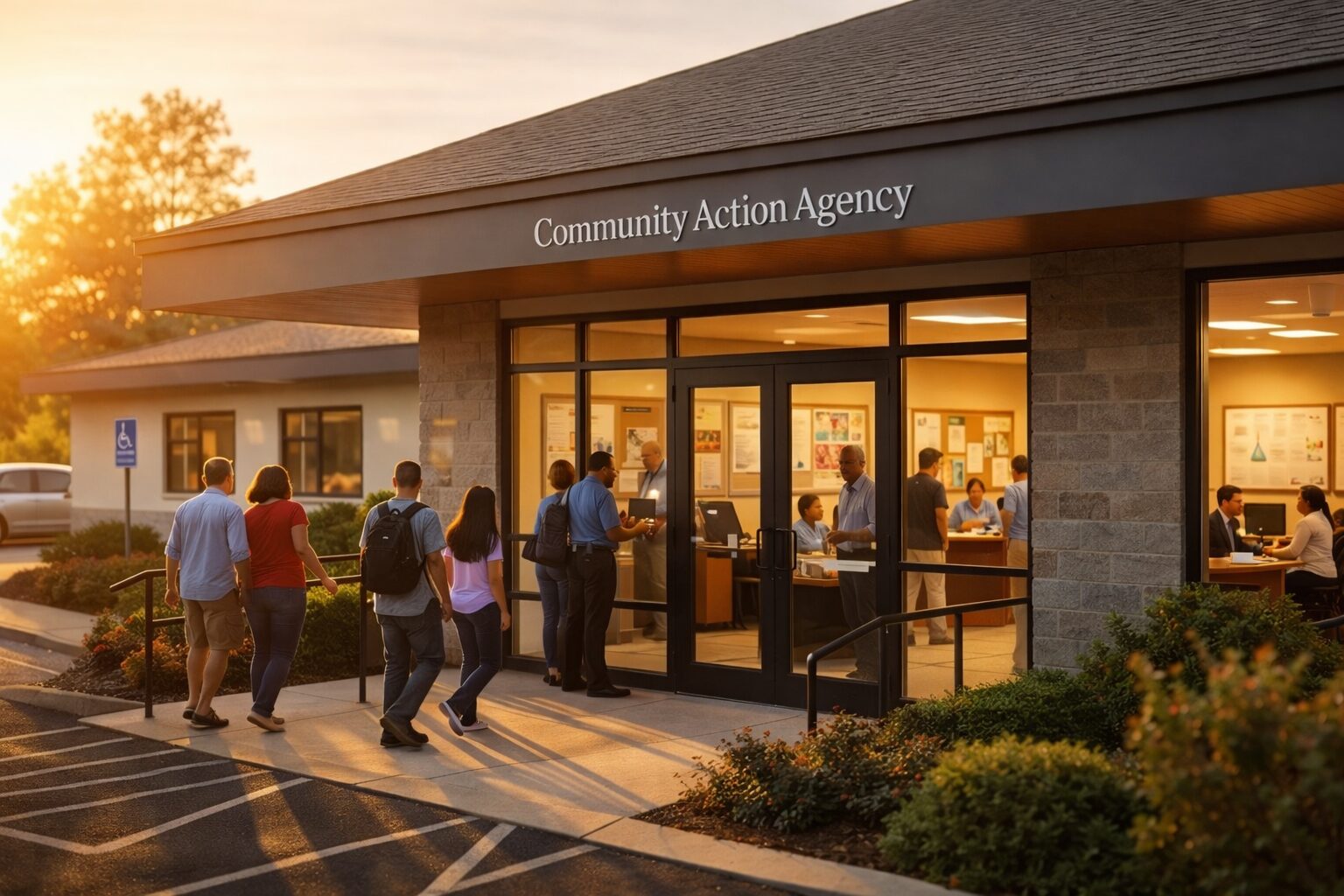
The right approach makes it easy to find and access your local community action agency’s services. The 2-1-1 helpline serves as your best starting point. This nationwide service connects you with local resources and helps you find the nearest community action program.
You can locate community action agencies through the national website. Just enter your zip code, state, county, or radius to find nearby offices. Many agencies now provide online client portals that make applying much easier.
Before you apply, gather these required documents:
- Photo identification
- Proof of income (last 30 days)
- Current lease agreement or mortgage statement
- Recent utility bills
- Documentation of financial hardship
The process starts with an online form and moves to an eligibility review. You might need to visit the office for an interview. These agencies handle applications on a first-come, first-served basis, and they often have limited funding.
Community action partnership organizations adapt their services to meet local needs. Orange County’s CAP shows this well with its complete support system. They offer programs like Home Energy Assistance (LIHEAP) and family resource centers.
Programs may stop taking applications when they reach capacity during the year. But don’t worry – if one program is full, the core team can usually point you toward other community resources.
Conclusion
Community Action Agencies are ready to help you through the challenges of unemployment. These organizations do nowhere near just provide temporary relief – they build paths to self-sufficiency through complete assistance programs. CAPs don’t deal very well with job loss by offering help with utility bills, housing, food, childcare, and job training.
The local focus of these agencies will give a better match to your community’s specific challenges. Their individual-specific support works especially when you have barriers to employment and financial stability. The core team knows how to connect clients with alternative resources when funding runs short.
Anyone facing unemployment should contact their local Community Action Agency right away. A simple call to 2-1-1 or visit to the national website will locate nearby offices. Getting your documents ready beforehand makes the application process smoother.
These agencies bring hope during tough economic times. Their dedicated staff, complete programs, and community-focused approach help millions of Americans yearly. Since 1964, these vital organizations have stayed true to their original mission – fighting poverty and strengthening people toward self-sufficiency, one community at a time.
Key Takeaways
Community Action Agencies serve as essential lifelines for unemployed individuals, offering comprehensive support beyond temporary relief to help achieve long-term self-sufficiency.
• Over 1,000 Community Action Agencies nationwide serve 9.3 million low-income individuals annually with $5.6 billion in resources • CAPs provide critical services including emergency financial assistance, job training, housing support, utility help, and childcare programs • Access help by calling 2-1-1 or searching online with your zip code, then gather required documentation like ID and income proof • These agencies operate on first-come, first-served basis with localized approaches tailored to specific community needs • CAPs focus on creating pathways to self-sufficiency rather than just providing temporary assistance during unemployment
When facing job loss, Community Action Agencies offer hope through their comprehensive support systems designed to address the multifaceted challenges of unemployment while building foundations for future stability.
FAQs
Q1. How can Community Action Agencies (CAAs) help during unemployment? Community Action Agencies offer comprehensive support services for unemployed individuals, including emergency financial assistance, job training, housing support, utility assistance, and food programs. They focus on promoting self-sufficiency and addressing the multifaceted challenges of unemployment.
Q2. What are some key services provided by CAAs to unemployed individuals? CAAs provide various essential services such as emergency rental assistance, energy bill help through programs like LIHEAP, food assistance through connections to food banks and programs like WIC, job training and placement services, and childcare support to enable parents to work or attend school.
Q3. How can I find and access help from a local Community Action Agency? You can find your local CAA by calling 2-1-1 or searching online using your zip code. To apply, gather essential documents like ID, proof of income, and bills. Most agencies process applications on a first-come, first-served basis, so it’s best to apply as soon as possible.
Q4. What should I do to stay productive and maintain morale during unemployment? Establish a daily routine, set goals for yourself, engage in hobbies or learn new skills, volunteer in your community, and maintain social connections. It’s also important to take care of your physical and mental health through regular exercise and self-care activities.
Q5. Are there any financial considerations I should keep in mind while unemployed? Yes, it’s important to review your budget, limit non-essential spending, and explore all available assistance programs. Consider options for health insurance coverage, such as COBRA or marketplace plans. If eligible, apply for unemployment benefits and other social services to help bridge the financial gap during your job search.